Haven't listened to the Talking Heads much last several years but only because they are sort of like Squeeze, for me, in that I listened to them so much when young, I didn't really have to listen to them to hear them any longer. But listening to this episode brought back memories of borrowing and wearing out my library's VHS copy of Demme's Stop Making Sense.
Twenty years later, the swing music revival of the late nineties remains a perplexing hallmark of the decade. For a few years, bands that swung made a forceful showing on mainstream radio. Leading the pack was Carrboro's Squirrel Nut Zippers, who cloaked raucous rock in fast-and-loose hot jazz arrangements. Its ebullient songs were as inspired by the Pixies as they were by Fats Waller and Louis Armstrong.
~Remembering when Swingers felt so profoundly relevant, cool, and deep. So ... money.~
Need to clean out the to-be-blogged-about items I've got building up in feedly. Prefer the one-post-per-link-or-subject approach, but the backlog is too daunting. So, it's a digest post. Possibly the first of several?
My go-to means of viewing movies by ... emm ... occult means appears to have been put down by The Man so I've fallen way behind seeing hard-to-find movies that I really want to see, like High Rise.
[It] embodies great things about America, but also our worst things: self-righteousness, forced piety, earnest self-reverence, foam.
It's not the national anthem so, no, I won't stand, won't remove my cap, and certainly won't sing along. (The Yankees, not surprisingly, are the absolute worst about this. Kate Smith's version scrapes the inside of my skull. I'd sooner stand for "Jeter Bless the Bronx" than listen to that mess ever again.)
Salomone contends that "Walk of Life" is "the perfect song to end any movie," and he tests that hypothesis by laying it over 50-plus classic endings. Bill Murray whispers in Scarlett Johansson's ear and leaves Tokyo behind, riding off into the sunset on Mark Knopfler's wistful synth-organ melody; the titular Friends decide to grab one last coffee at Central Perk while Knopfler sings about some dude busking in the subway. "Walk of Life" closes out comedies and dramas, sci-fi odysseys and character studies, happy moments and sad ones. It works with Inception just as well as it works with The Lion King.
I've take some grief for my enduring fondness for Dire Straits, and Mark Knopfler's solo albums and soundtrack work, in some cases perhaps deservedly. While I resist the notion that a "guilty pleasure" is a thing, I find myself willing to excuse some excessive synth & keyboard noodling in his compositions (the Local Hero soundtrack) that I scowl at in others. The songs still work for me, even when I recognize they shouldn't.
Yep, I've watched "The Husbands of River Song" and hope to finally get my review post up this weekend. Trying to think of a way to incorporate thoughts on the other Moffat-y holiday special, "The Abominable Bride" along with it; but, things have been more hectic than normal since the run-up to the holidays, our family trip to Utah, my weeks of illness (nothing major, just a stubborn, exhausting chest cold and sinus infection -- all better now), and I'll probably need a refresher re-watch before finishing it up.
Also have it in mind it's time to make a mix CD for one of my distant friends. Am leaning towards a theme like North Carolina music through the years -- but not the stadium fillers like Clay Aiken, James Taylor, and Ben Folds, nor the folk/bluegrass/country old-timey stuff we're known for (though the Carolina Chocolate Drops will almost certainly be represented). Want to design it up like how archaeologists of post-anthropocene Earth, the highly evolved descendants of today's cockroaches, might speculate Hopscotch looked based on the scant few clues our civilization will leave behind.
This is all by way of saying I didn't want you all -- or you, if there's only one of you left -- to think I'd forgotten about the joint.
Anything you'd like to discuss in the meantime? #OscarsSoWhite? Me, I'd love to see more folks join Jada Pinkett Smith, her hubs, Spike Lee, and Michael Moore in declining to attend on principle. Actually, I'd especially like to see more Anglo actors and filmmakers step up and call out their brethren (my people, the "whites") ... keep Chris Rock as host, let the audience be nearly all black, asian, and latino; let's see how that ceremony goes and what we'd hear about the Academy being run as a white supremacist group then. I'd pop corn and watch the hell out of that. I bet Ruffalo's down.
As it is, I expected I'll just read about it the next day and see what highlights come out of it.
Or, we could marvel at the observation that David Bowie died, and suddenly there's a ninth planet out there.
bowie leaves us and then a 9th planet appears, i don't need to read your science article
Snowstorm bearing down on the Northeast so climate denialists can point to snow somewhere on Earth where it's winter and deliberately not talk about how hot 2015 was?
Did I mention yet that we cut the cord and dropped cable? SlingTV, pbs.org, Hulu, Netflix, and Prime covering most of the bases, only struggle so far has been not being able to see the Huskies on the ESPN app. Treme, you guys. I think a lot of us slept on Treme. Finally gave House of Cards a try as well and might get hooked ... but I feel like they're walking a fine line when it comes to product placement. I don't mind my characters using brands, I mean, we all do, that's life. However, the degree to which a show can draw attention to it, or pretend it's not drawing attention to it, and still be a drama (as opposed to a fancy commercial) is the question ...
Oh, and how could I forget about the Duke losing streak?! How great is that? The way it rolls of the tongue ... Duke losing streak. Coach K so pissed he can't remember how to shake hands. Maybe the only good thing about 2016 so far?
Active for more than 30 years, the band owes its staying power to its ability to absorb and integrate a vast range of influences and express them in a wholly personal way. Stuff Like That There singles out and connects some of those myriad points of reference—everything from The Cure, to pre-cosmic doo-wop from Sun Ra, deep cuts from The Lovin' Spoonful and 1980s alt-rock contemporaries Antietam and Great Plains—to reveal the band's emotional and philospohical [sic] musical center.
Vice covers way more ground in their write-up about Ekberg's past, and I definitely encourage you to give it a read at some point. However, the piece ends with an interesting question: "Did Ekberg use Ace of Base's success as an opportunity to wipe the slate clean and erase his neo-Nazi past?"
I think I can answer that. Ekberg did not use Ace of Base to hide his Nazi past. Quite the contrary. Ace of Base was a Nazi band, too.
via:
Wow, is this true? I'm not 100% convinced but what an entertaining read. Achtung! https://t.co/kmvnwebASC
The band played everything from 70’s era single “Where Were You?” to tracks from the latest album (2011’s Ancient and Modern) and virtually everything in between. I’ve always loved the 2000 album Journey to the End of the Night (saw the tour) and we’re streaming an incendiary version of “Tina” below. The band’s 80s catalog was also well represented and we’re also streaming an excellent version of Sally Timms’ coined 1988 single “Ghosts of American Astronauts”.
Here's "Tina," but don't stop here, zip on over to nyctaper for the rest. Great stuff.
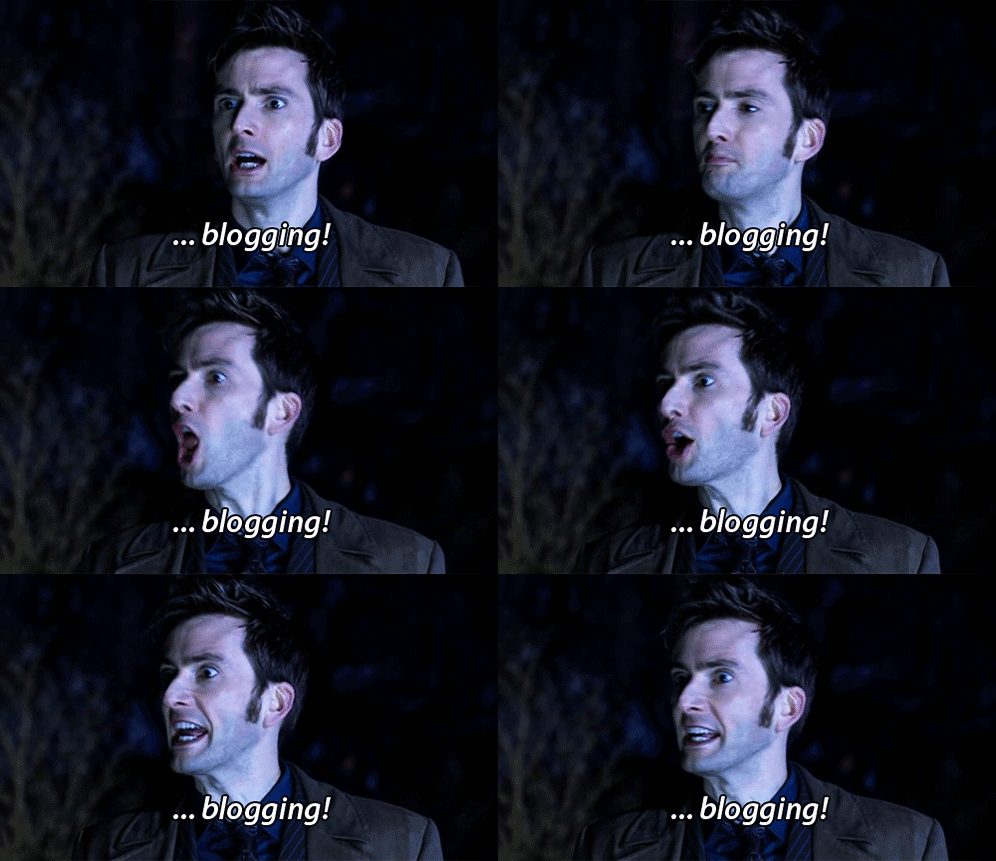
Frankly, taken all together, the Series 3 three-part finale doesn't work for me. No, it's not because Ten is dismissive of blogging; despite my prickly disposition, I can let that slide. And, certain elements absolutely do work -- it's by no means a complete wash-out. But, it's hampered by a less than successful integration of a trio of domestic abuse narratives it attempts to weave into a story powered by a Paradox Machine featuring the return of the Master who's got a wild scheme cooked up to use the Earth as a launching point for a intergalactic domination.
Could the themes ever have been explored by this show in this sort of story? Sure, it's tricky stuff, but you can do pretty much anything with Doctor Who if you put your mind to it. The execution just falters over the season, stumbling hardest here at the end. The real hero of S3, Martha, is made unlikable through no fault of her own, while we're asked to continue accepting the Doctor as a hero, despite his being portrayed as a narcissistic ass with no regard for his friend's feelings. Sabotaging Martha's character only serves to undermine the authorship of the series.
The poor handling of Martha's arc from med student in residency to unrequited departing companion detracts from what is otherwise a strong season. This is, after all, the year in which we got "Human Nature" / "The Family of Blood", "Blink", and vastly under-rated "42". (Sure, after starting strong, it sags hard in the middle, but delivered a series of gems leading up to the finale.) If the vision of the third series hadn't been to show why Martha's companion status was untenable -- or, un-Ten-able, eh? -- this could have a wild success.
Well, the other impediment that would've had to have been addressed before this could have been a wild success is the dump Murray Gold on the incidental music tracks. Because, wow, the music in this story sucks. It sucks so hard. Not so much in "Utopia," but once we get into part two, and from then on, it's unlistenable. (Martha's theme at the very end of "Last of the Timelords" is OK, but it's too little, too late.) It's been uneven under Gold, but this one calls back the dark days of the dying classic series, when the show was an aesthetic abomination from bean to cup.
Here's the lens I think it's most helpful to use, among several possibilities (not the least of the others would be a focus on the origin of the Master and his relationship with the Doctor): "Utopia" is Chantho's story. Domestic Abuse Narrative 1. She's killed by the man to whom she made herself subservient, Professor Yana/the Master, a man more focused on his work, not capable of returning affection. She kills the Yana body, but he'd already been de-Chameleon Arched at that point and could regenerate so the cycle of abuse evolves and continues...
"The Sound of Drums" is Lucy's story. Domestic Abuse Narrative 2. Vulnerable Lucy is convinced by the Master to make her own choice in staying in an abusive, exploitative relationship. He does this by showing her a future with no hope at the end of time -- the genesis of the Toclafane, if you will. Her story continues into part three, where she also gets a turn killing the Master. However, as with Chantho, the cycle doesn't end ... a woman's hand pills the Master's ring from the ashes of his funeral pyre so we know he'll be back. But we'll call part two Lucy's story because ...
"Last of the Time Lords" is the conclusion of Martha's season-long arc. Domestic Abuse Narrative 3. She makes the choice Chantho couldn't. She is the one who, among other heroic actions, breaks the cycle of men taking advantage of woman, and she does it without violence. She saw the same future as Lucy -- although, to cut Lucy some slack, Martha didn't actually see the failure of Utopia. Hearing about it though, she still doesn't abandon hope in the future (her future), she resolves to make the best life for herself she can and soldier on.
So why don't we like Martha? The series was rigged against her. She's the hero, but her work is undone. She and the Doctor remember "the Lost Year," but nobody else does. And, more to the point, she spotlights how the Doctor is the same as the Master, at least in this one regard. Minus, of course the physical abuse. And, because, she's the one pointing it out, with eye rolls and woe-is-me asides, it's easy for us to blame the messenger for the news that this Doctor is self-centered and inconsiderate. (He's not yet the Time Lord Victorious, but he's on the way ... )
And because the whole season is entwined, remember Lazarus not only provides the basis for the tech the Master uses to age the Doctor down to a dessicated walnut, but killed his partner, Lady Thaw, as well, Martha's season is inseparable from its emotional and physical abuse themes. To the extent the Doctor is implicated in them, it is ... disturbing. It's fixed, I think, if ... well, you pick the spot, but I'll go with when they share a bed in "The Shakespeare Code" ... the Doctor says, "Look, Martha, I know. You are amazing. I'm nuts, but it can't be that way for us. We can travel together as friends, but that's how it's got to be. I can't have another miserable TARDIS filled with sniping and recriminations. Have I told you about Tegan ...?" Get it out in the open, deal with the elephant in the room, and either proceed with mutually agreed upon arrangement, or call it a day. Whichever course Martha takes from there, the Doctor at least has been open and honest, instead of toying with her.
Back to this finale triptych not being all bad, this episode in particular actually quite strong. Right from the open, the shot of the TARDIS materializing with the gleaming skyscraper in the background is signals imaginative effort has been put into this one. Yeah, we get some rapid-fire exposition about Cardiff and it's position on the Rift, but it's dumped and done. If you can swallow that pill, you're ready to be swept along. Plus, it would be weird, given the amount of emotional and physical abuse the women take, if the Doctor had used Martha the Glasgow Kiss Exposition Method he deals Craig in "The Lodger."
Truly great: Derek Jacobi's too-short turn as the Master. He does some subtle Delgado tribute inflections that totally work for me. But, like Delgado, knows when to go big. Simm is fine. Simm is RTD's camp take on the Master and, sure, I'll roll with that. But, man, how great would it have been to have Jacobi as a recurring villain for a while?
Chantho could've been straight from a China Miéville novel. She looked great and her "Chan" and "tho"s bracketing each of lines -- except when Martha encourages her to be vulgar -- is a nifty little detail that makes her seem more truly alien.
Captain Jack is back. Never going to mind a call back to Eccleston season. He even uses Nine's "Fantastic!" at one point and, of course, brings up Rose, wondering if she died at Canary Wharf. He ties the three series together, lending a feeling of continuity that assures us events and people aren't just forgotten. That's a hard balance to get right. You don't want to bog the series down, but you can't keep having the Earth get invaded and things being back to normal the next time the TARDIS touches down either without cheapening what's come before.
The far future setting isn't exactly convincing, and the Future Kind look like folks that got bounced out of a Mad Max open casting call, but it's just good enough to make the cliffhanger one of the best we've seen in a while.
Series 3, Story 12 (Overall Series Story #191b) | Previous - Next | Index
The Master and Lucy love them some Rogue Traders, don't they. "Here come the drums," indeed.
Y'know, it's not a song I love, but it's got a beat (courtesy of Elvis Costello, at least in part -- there's more than a little "Pump It Up" in "Voodoo Child"'s DNA) and I'm not going to complain about its inclusion. (No more than I did "Tainted Love" and some Brittany Spears back in "The End of the World") but stick around after the song in the clip below and listen starting at about 2:18 to what Murray Gold does. Listen, if you dare. You'll be pleading for him to bring back the drums. I neither love nor hate Murray Gold. He's done some good work, and some poor. What he does here though is make the show sound worse than daytime soap operas ever did.
As intense as the "Utopia" cliffhanger was, the resolution is cursory. Wave the sonic and *poof* they're out of the jam; before you can catch your breath, we're firmly in sci-fi soap opera mode. Tish and the rest of Martha's family, excepting her dad, range from dramatic equivalent of a snooze button (her brother), to outright unlikable. They're just not characters it's possible to care about. That's Martha getting the shaft again: where Rose had Jackie's out-sized personality to play against, Martha has her mom's perpetual sourpuss. (I do like her dad, but he's lost in the shuffle.)
In a world of corrupt politicos and unchecked oligarchy, a crusading free press is our greatest defense against those would reverse the progress of the last century and roll back secular democracy. With that in mind, I loved how it was a journalist who sussed out the problem with Saxon. That she got blind-sided by Lucy's devotion to her monster of a husband fed into my frustration with the story in general. Soap opera logic run amok.
Tonally, I'm put off here too by the mix of camp and macabre. The repeated gag of the Master and Lucy opening the door, hearing the journalist's screams as the Toclafane butcher her off camera, closing the door, then opening it again ... it's fair horror comedy, but now were layering comedy over horror over soap opera over sci-fi over Murray Gold's sonic assault ... and I'm burned out on the mess it's become.
To the extent this is an origin story for the Master, I like the chutzpah of RTD laying claim to the character. I'm not so sure the whole origin of the Master thing was particularly well-conceived. Tantalizing, but unsatisfying. How many young Time Lords are driven mad by the schism? It's a little late to be giving the Master martial tinnitus -- if he's been hearing the sound of drums his whole life, why didn't we ever see it before?
A few stray thoughts:
The aircraft carrier where First Contact with the Toclafane is to be staged looks like a solid influence on the helicarriers in the MCU.
The Master has jelly babies. He must be missing Four.
If the American President depicted here is anything like how the British view American politicians, they must think we are clowns. Of course, we are, and the characterization seems pretty spot-on. So...
At the end of the last episode, Martha had escaped the carrier to a ravaged Earth. The Doctor had been reduced to a CGI Dobby in a cage. Now we open to a title telling us it's ... One year later ... which must mean it's time for more shit music.
So it turns out I've pretty much front-loaded this write up and have already mentioned how Lucy's and Martha's different responses to future's they envisioned with the Master and the Doctor, respectively, make the former tragic and the latter heroic. It's in this episode though that Lucy's shiner is a multi-layer sucker punch. On the one fist, it's the character showing the signs of abuse, on the other, it's us, the viewers, seeing the Master no longer as super-villain, a megalomaniacal archnemesis for our hero, rather, facing the realization he's a more mundane and commonplace evil: a garden variety wife beater.
It's hard to commit to caring much about a story that we know, by the conventions of TV storytelling, is going to get invalidated. The puzzle is how it's going to get done; but, once you see the how, you've been paid off and there's nothing left to enjoy about it. Just as it's hard to imagine wanting to do a jigsaw puzzle, then break it down and do it again, it's hard to see what the point of watching Martha go through the paces so she can get back aboard the carrier to see the fruition of her storytelling.
Once. You can do this reverse/reboot/reset once, maybe, if you do it well, but it's trick that wears out its welcome. The lost year pre-emptively sucks the life out of "The Big Bang" (S5) and "The Wedding of River Song." (S6).
The Master's pop music obsession starts to grate in this episode as well. Scissor Sisters "I Can't Decide" is not as catchy as "Voodoo Child," a jarring reminder that much of this isn't going to age well.
You can't talk about this episode and not remark on how the Doctor gets healed by humanity leveraging the Archangel Network to not only bring him back to the prime of life, but render him glowy and floaty in some glam-trippy excess that could've been straight out of the Pertwee era. Heck, if it weren't for the music, I might not have cringed so much.
So there it is. The Doctor gets his shine on, defeats the Master, and things look to be rolling to tidy conclusion until Lucy snaps. Doctor-Master histrionics ensue, Tennant chews the scenery and we wonder how's managed to misplace his emotions to care so much about the childhood friend he's been locked in a dance of death with for centuries. I mean, dude, let it go.
Ultimately, the Master ends up atop a funeral pyre, precedent I suppose for Eleven's Viking funeral on Lake Silencio. Of course, now as it will be later, no Viking funeral for a Time Lord is final. A woman's hand (Not the Rani! Stop it.) collects the Master's ring to ensure he can return for "The End of Time."
This won't be Martha's final farewell, either. She leaves, comes back to tell the story about her girlfriend's obsession with some Shawn bloke, leaves again. Passes up the opportunity to meet Agatha Christie, so Donna will get that adventure instead. Much as loved Freema Agyeman as Martha, and refused to the writers sour me on an ideal companion, I have to admit the dynamic is better with Donna, so one Martha season ended up being enough. It just wasn't the season the character deserved.
“We’re capitalists, and we have to look at what the demand is, and we have to respond to the demand.”
And there's the problem. Capitalists look at NCCU's Jazz program, with Branford Marsalis on the list of faculty and think, "How's this going to serve Duke Energy? Fuck it, gone."
Via:
And they have the list...
Daily Tar Heel :: Board of Governors eliminates 46 degree programs across UNC system http://t.co/a0o1DsK0HS#nced
The first revolution comes in 1964, with the dying out of traditional jazz and blues chords during the British Invasion of The Beatles and The Rolling Stones. The second occurred in 1983, when new technology ushered in the ascent of synthesizers, drum machines, and samplers—meaning Eurythmics were more of a musical revolution than The Clash, which it will please everyone to know. The last revolution took place in 1991, with the mainstreaming of rap and hip-hop, which researcher Dr. Matthias Mauch describes as “the biggest...rap and hip-hop don’t use a lot of harmony. The emphasis is on speech sounds and rhythm. This was a real revolution: suddenly it was possible that you had a pop song without harmony.”
Men at Work, Culture Club, Eurythmics ... not names generally clubbed in with the Beatles & Stones, or with Public Enemy, N.W.A., & EPMD.