Wednesday, July 29, 2020
The Battle of Blair Mountain
Monday, April 16, 2018
Housing as a human right
The tragedy is that it’s entirely within our power to do something about it: homelessness is not a choice made by the individual, it is a reality forced by government policy. As homelessness has rocketed in the UK – up 134% since 2010 – it has fallen by 35% in Finland over a similar period of time. The Finnish government is now aiming to abolish it altogether in the coming years.
I recently travelled to Finland to understand how it had done this. It turns out its solution is painfully simple and blindingly obvious: give homes to homeless people. As Juha Kaakinen, who has led much of the work on “housing first” in Finland, explained to me when I met him in Helsinki, “this takes housing as a basic human right” rather than being conditional on engaging in services for addictions or mental health.The American liberal may have some reservations about this policy. (I'm not bothering to consider the Conservative case, we'll get to most of it in addressing liberal concerns, the rest will simply be too despicable, cruel, and racist to engage with.) There are three main concerns raised fall under:
- We can't afford to give homes away.
- Even if we could, we shouldn't because doing so would be demotivational and encourage people to be dependent on the state. (That is to say, lazy.)
- Doing so will interfere in the proper functioning of free market capitalism.
The evidence from Finland – as well as numerous other pilot schemes across the world – shows ... [w]hen people are given homes, homelessness is radically reduced, engagement in support services goes up and recovery rates from addiction are comparable to a “treatment first” approach. Even more impressive is that there are overall savings for government, as people’s use of emergency health services and the criminal justice system is lessened.
We the People of the United States, in Order to form a more perfect Union, establish Justice, insure domestic Tranquility, provide for the common defence, promote the general Welfare, and secure the Blessings of Liberty to ourselves and our Posterity, do ordain and establish this Constitution for the United States of America.What you don't find is anything that says we absolutely must be a capitalist economy and the economic liberty to concentrate as much wealth in the hands of a small number of families ought to be our overriding concern. My main point here is "promoting the general Welfare," is clearly laid out as one of our founding principles. There's more than one way to gauge how we are doing currently at pursuing those lofty goals, but one simple way, no less valid for its simplicity, is to look at how much we spend on the common defense versus how much we spend on promoting the general welfare. It's not as easy as saying the two amounts should be equal, but I maintain that when you already have the most powerful military in the world and nobody is trying to invade you, you don't need to pump a significant portion of your overall spending into developing more armaments or fighting imperialist wars abroad. Rather, the greatest chunk of our wealth (and we are, after all, the wealthiest nation in the history of the world) should be spent on promoting the general welfare. That general welfare, if we take Maslow's hierarchy of needs as a starting point as good as any, it seems to me if we aren't addressing at least the physiological needs (shelter, food, health care) and safety (national defense, sure, but also clean air and water, untainted food, safe communities where you don't have to worry about individuals with access to military-grade weaponry terrorizing your schools, etc.) then we don't even have a country worth defending.
The freedom to accumulate wealth should not be seen as illimitable. It must be balanced against the freedom of all people in a society to live free from want so they can self-actualize to the best of their abilities. We're not talking about "mandated equality" or Orwell's grim take on communism, we're talking about revolutionizing our way out of neoliberalism to what I'll call democratic socialism, which I hope would lead to full communism, but to the extent that's a utopian vision, we'll let democratic socialism do for now. Mere tweaks to the current system, incremental reforms aren't going to get it done. We need radical, revolutionary change to get after living up to our Constitutional mandate because we've gotten it so, so wrong so far.
Is "the Constitution says" the final word here? Can we trust so flawed a document? I stuck to the preamble because it lays out principles I think all reasonable people could find morally acceptable, but the morality of the thing shouldn't be disregarded. What if promoting the general welfare is actually one of the Founders' mistakes? What about the enslavement of the people by the state, who make them weak and dependent by subsidizing their base needs -- stealing from the deserving rich to indulge the lazy poors!
OK, I'm not going a very good job at taking this concern seriously, but here's why: not even, and perhaps especially, the people who advance the concern even do. They wield the idea like a weapon, but when we look at the context in which the concern is raised, what we see are trust fund babies and trust fund baby daddies who've benefited from being the privileged heirs of wealth arguing that their peers (conveniently labeled "job creators") are the most deserving of government largesse to help them become wealthier, with the presumptive benefit of that wealth trickling down to the lower class. When you see these guys who were sent to elite prep schools, graduated to work at dad's firm, got bailed out each time they failed, then lauded each time they succeeded, arguing that giving people things spoils those people, the hypocrisy is enraging. They exploit the working parents' concern, a natural one, that spoiling a child leads to ungratefulness and laziness. But, children are children, and all children deserve to be raised in safe houses, well-fed, given the opportunity to play and learn, and with the ability to see a future for themselves. We don't have that today.
I'm not saying give all children gold toilets to poop in, or that children don't need to learn to self-discipline, but let's get on the same page about how to do that and level the playing field for the children of migrant laborers and the children of investment bankers and Senators. (As long as we have investment bankers, that is.)
Furthermore, adults are not children and the idea because you happen to be wealthy you should be able to act paternalistically, in their "best interest," is disgusting. That's a kind of freedom, the ugly freedom for me but not for thee kind though. You might argue I'm saying this while arguing for a paternalistic state that provides for its citizens. However, I'm not telling people how they ought to live, nor how their suffering builds character while my privilege builds my character based on some predisposition to superiority; I'm saying the state has an obligation (Constitutional and ethical) to provide the freedom for all people to decide how they want to live by giving them freedom from as much suffering as it can. Will some people end up living more luxurious lives than others due to their motivational drive and a bit of luck? Yes, I'm only saying there's a limit to how luxurious that life can be before it impacts the freedom of other people's children to enjoy the same opportunity to make that life for themselves.
Turning to the last objection, the need for free market capitalism to ensure maximum freedom. We've been running this experiment for quite some time and have seen how unfettered capitalism distributes wealth: monopoly and wage slavery. So, we've settled on neoliberalism as the best way to regulate markets in line with white supremacist imperial principles. "B-b-b-but Soviet gulags, Venezuela, and Cuuuuubbbbaaaa!" neolibs inevitably point to as the failure of so-called socialist states and their supposed tendency towards totalitarianism ... while failing to recognize the degree to which those examples were, and are, state capitalist oligarchies, usually under intense pressure from international alliances working against them. I'm no apologist for Stalin, but it's a bad reading of history to paint Stalinism as socialism.
Tuesday, September 12, 2017
On the anniversary of 9/11
For me, 9/11 will always be a time of tremendous fear, stifling conformism, forced patriotism, and vicious nationalism. Which is why I’ve always found the claim that Trump represents a new authoritarianism, even fascism, to be so fanciful and false. There was a moment in the recent memory of this country when dissent really was stifled ... [W]hen intellectuals and journalists and academics dutifully—and shamefully—performed their parts in the Gleichschaltung of the moment, instructing the unreconstructed among us to understand that we were living in a new age when all the old truths no longer held. Thankfully, the intensity of that moment didn’t last too long—the fiasco in Iraq did it in—though we’re still living with its consequences today. But, yeah, when I hear about the unprecedented authoritarianism of Trump, I think to myself: either you weren’t around after 9/11 or you were part of the problem. -- Corey Robin
My kids -- 6th graders -- learned a little bit about the September 11, 2001 attacks again yesterday. Some of their teachers lost family and friends at the World Trade Center. They were moved to tears by the accounts they heard. They've learned a little bit about 9/11 each of the last couple years at school. Which, is OK ... here comes the "but," but they don't learn nearly enough and I'm afraid they're getting entirely the wrong lesson out of what they are taught.
I remember where I was. I, too, will #NeverForget. (Here it comes again ...) But, I know that 9/11 is also the anniversary of the U.S.-backed coup that overthrew the democratically elected government of Chile in 1973. Even though I don't remember where I was that day -- I was, after all, only 2 years old -- in terms of what it means to be American, to understanding our place in the world and how things got to be the way they are, knowing about Allende is, at the very least, as important as paying tribute to the victims of the 2001 attack on us. Yet, I doubt many 6th graders have ever heard about Allende at school, or have a good understanding how the memory of the victims of the 2001 attacks is used to justify 16 years and counting of war on Afghanistan, how it whitewashes what we've been doing in Iraq and around the Middle East since. Never mind what the self-proclaimed "leader of the free world" had been doing in the Middle East prior. Have they heard the phrase "they hate our freedoms" yet? I don't know, but the thought they probably have is chilling. Chilling, because I know they haven't been taught that our wealthy elites are the ones who demonstrably hate our freedoms and exercise the power to do something about it. And, just as importantly, American oligarchs, like their Russian confrères, hate the freedoms of anyone in the world that stands in the way of their ability to maximize profit.
| Allende supporters. Image via Wikipedia. |
HELLO pic.twitter.com/B2YADtlg5l
— Erin G. 👩🏼🌾 (@ErinGoudreau) September 11, 2017
Friday, August 18, 2017
Some of the statues can stay. Just not the racial terror ones.
this thread should become a coffee table book https://t.co/hMrGfeBib5
— Tom Tomorrow (@tomtomorrow) August 18, 2017
Blogged with IFTTT
Thursday, May 18, 2017
Our 45th President Is As Cowardly As He Is Ignorant
Eugene Debs was given a 10-year sentence and served hard time for giving a speech, snowflake. https://t.co/jDL7s6XkLo
— Kevin Murphy (@kcm74) May 18, 2017
Blogged with IFTTT
Sunday, April 16, 2017
Last Survivor of the 19th Century Has Passed
Last known living person born in the 1800s, passes away. BBC: World's oldest person Emma Morano dies at 117 https://t.co/hyuQmYZU0o
— Peter Tinti (@petertinti) April 15, 2017
Blogged with IFTTT
With all the TV networks we have, and for the number of reality TV shows in production, it continues to amaze me that we don't have one that focuses on the oldest living humans.
Thursday, November 3, 2016
Laika
Remember #Laika as you gaze at the stars tonight. It was exactly 59 years ago now that she made history as the first animal to orbit Earth. http://pic.twitter.com/ZLrLO3N1YC
— Varyagi (@varyagi) November 3, 2016
Blogged with IFTTT
Thursday, October 27, 2016
"[No] legislature ... has ever done so much, so fast, to restrict access to the franchise."
In North Carolina, spending on state races increased by 20 percent from 2008 to 2010, an investment poured mostly into Republican campaigns. Almost all of the independent money spent on state races in 2010 came from conservative millionaire mega-donor Art Pope, his family, and allied groups, who spread over $2 million across 22 races. Of those 22, Republicans won 18, creating GOP majorities in both chambers of the General Assembly for the first time since Reconstruction. Only this time, Republicans were focused on restricting the electorate rather than expanding it.
The Jujutsuffragettes
And that’s where the Bodyguard stepped in—in between their sisters-in-arms and members of law enforcement, their mission to keep these prison breaks as long as possible. The women of the Bodyguard were extremely fit, willing to risk their health, safety and freedom, and almost always single, since it was considered unfair for mothers to be thrown in jail. They came from the ranks of the most radical suffragettes and studied jujutsu in a network of secret locations, using codenames and whatever subterfuge necessary to keep their activity private from prying eyes.
Friday, September 23, 2016
"Pitch" and the history I didn't know ...
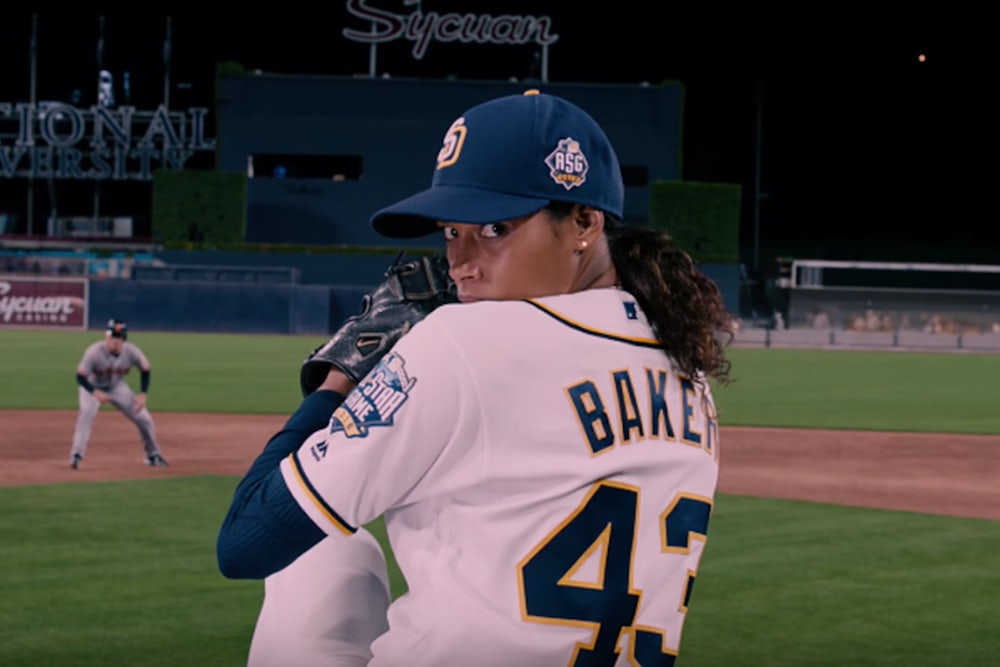
I'm not going to say the fact that three women played in the Negro Leagues is the most interesting thing to come out of watching, then reading about, Fox's Pitch because the show was better than I thought it'd be. Not without problems, but better than the mess it might've been.
Will give this one a few more episodes to see where it goes. A primetime network drama about baseball is something I want to like, and it doesn't hurt that it's premise gives it a myriad of interesting directions to go in.
Related:
Toni Stone
"Peanut" Johnson
Connie Morgan
Wednesday, September 7, 2016
Reading lately ...
I've been slow to check out the Kindle First selections that are starting to back up in my "to read" queue, but it's largely because I've been grabbing some recent Hugo award winning authors I was asleep on. N.K. Jemisin and Ann Leckie have woke me up. The Puppies, and their attempts to game the Hugos in the name of patriarchy and white nationalism for the last few years, have overshadowed, to some degree, how good the winners have been.
On the non-fiction side, Haidt's The Righteous Mind was an intriguing read -- perhaps supplying the science behind what many have argued is the insufferable arrogance of the New Atheism. (Mind, it doesn't make a case for the existence of a deity, nor does it suggest government and religion should be intertwined; rather, it puts the case for religiosity being more than a manifestation of a parasitic, viral meme in terms rationalists will be open to.)
Long time Tryptic Cryptic / c-i-e favorite Kevin Murphy has co-authored a new book, The Past and Future City, which will be released in October. The review call it "an articulate call to action that should be of interest to scholars, community organizers, and policy makers in municipalities across the country." Neither scholar, organizer, nor policy maker myself, I plan to read it because the case for historic preservation is one that ought to made for, and by, the citizenry at large.
Tuesday, May 24, 2016
You Know Nothing, Munro. (Polanyi Edition)
Good read on the contemporary relevance of Polanyi: https://t.co/4x6HmHJAf3
— Jonathan Cohn (@JonathanCohn) May 24, 2016
Blogged with IFTTT
Thursday, May 12, 2016
This Is the Sort of Analysis by 538 I Can Get Behind
Pedro Martinez's peak was *way* higher than any other pitcher. https://t.co/BHCtjDPl7D http://pic.twitter.com/ERlg335Wvb
— Nate Silver (@NateSilver538) May 12, 2016
Blogged with IFTTT
Thursday, April 14, 2016
The First First Lady Was A Real Piece Of Work
Read this thread about George Washington's family. Sheesh. https://t.co/5GAERE1pOH
— Bun Showers (@Rxbun) April 14, 2016
Blogged with IFTTT
Thursday, November 19, 2015
Joe Hill executed 100 years ago today.
| Image via In These Times |
Hill is one of those heroes our schoolbook histories let us down on. He died for our freedoms much more directly than any American soldier in Iraq ever did. That's not the soldier's fault, nor is it to dismiss the heroism of those who sign up to serve, but rather to point out their service is disrespected and exploited when their efforts and their lives are put into wars that make us, and the world, less safe and serve only the interests of capital.
In 1914, Hill was arrested in Salt Lake City and charged with killing a storekeeper, allegedly in a botched robbery. Despite the flimsy nature of the evidence, Hill was convicted and sentenced to death, with the prosecutor urging conviction as much on the basis of Hill’s IWW membership as any putative evidence of his involvement in the crime. An international amnesty movement pressed for a new trial, but the Utah governor refused and Hill was executed by firing squad on November 19, 1915. In a final message to IWW General Secretary Bill Haywood, Hill urged, “Don’t waste any time in mourning—organize.”
Friday, November 13, 2015
The Massacre - "Innocent? Heresy can have no innocents. France will breath of pure air after tomorrow. "
Season 3, Story 5 (Overall Series Story #22) | Previous - Next | Index
Can you imagine an episode of Doctor Who being produced for broadcast in the 2010s where the Doctor and a companion land in 1579 Paris, get embroiled in the political intrigue leading up to a heinous massacre and there's no aliens involved, nothing is "wrong" with the timeline, and the massacre is going to happen? Not only is the Doctor not going to try and stop it, he's going to send his companion's friend back into it without knowing whether she'll be slaughtered or not. (He's not the same guy as Ten and, if he didn't change his mind in the meantime, we'd never have ended up with Twelve wearing Caecilius's face.)
The Doctor Who that was being sent out in 1966 simply couldn't be made today. (Nor since 2005, nor since ... well, let's say it's possible to imagine another historical like this one after "The Highlanders" with Troughton, but it becomes increasingly less likely as we approach 1970, at which point it becomes all but inconceivable.) And look at what it's sandwiched between: a daft, dark Dalek caper epic, and, "The Ark," one that's barely more than a 50s drive-in sci-fi with an extra dose of "damned hippies" and overtly racist attitudes towards the darkies. That's bonkers show-running. But, it's brilliant, too. In it's way. The show is all over the place, taking broader strides than it dares even today. An acknowledgement we must couch in terms of those strides being across lines that oughtn't to have been crossed, even by our unenlightened, barbaric forefathers.
This is not to argue either than an episode along the lines of the "The Massacre" would be a good idea in the context of the sorts of episodes we're watching in 2015. Try this: set your mental thought experiment dials to 'Near Term Historical Atrocities', 'Current Cast', 'No Aliens', and 'No Timey-Wimey', and imagine what a hypothetical episode where the Doctor and Clara land in 1990s Rwanda just before a bunch of Tutsis were about to be macheted would look like. Don't know about you, but I threw up in my mouth a little.
And yet, and yet ...
There's something about "The Massacre" that draws you in and keeps you hooked. It's a bit educational -- the facts aren't very off what you'll read in Wikipedia -- and it's probably Steven's best story. He's a bit a buffoon, but he muddles through it here, and up until the very end, which I'll come back to in a bit, he's a coherent personality it's possible to relate to. Hartnell's double role, playing the Abbot of Amboise as a coincidental look-alike of the Doctor gives him a chance to stretch in way I bet he appreciated. It's hard to say without the video, but it sounds like he's doing a decent job. It may be a dead end historical, but it's one I'd love to see recovered.
Until watching the Loose Cannon reconstruction of this story, I had been pronouncing "Huguenots" (on those one or two occasions in my life had ever had reason to say the word aloud), and hearing it in my head, as if it were pronounced HEW-ga-NAHTS. I knew they were Protestants in Catholic France, but that would have been all I could have told you about them, not even knowing their time frame relative to the French Revolution, except I'd have guessed Before or Perhaps During. So, to my shame, next-to-nothing. It's certainly possible British schoolchildren watching the show in the mid-60s would have had some knowledge of the Huguenots and the politics of religion in France during the reign of Charles IX (contemporary of the series's favorite monarch, Queen ["Bess"] Elizabeth), but I'm going to go out on a limb and suppose nobody then, or now, who didn't specifically study that period of history would be expected to know very much of the Huguenots, never mind this massacre, or the massacre at Vassy some years earlier. So why in the world are we packaging this episode as "The Massacre" or "The Massacre of St. Bartholomew's Eve," and giving away the bloody ending?! It should have been called "The Huguenots," or "Where the Heck Did the Doctor Disappear to While Steven Got Mixed Up in Parisian Intrigue?!"
By that last, you'll have deduced there are problems with the mechanics of this story. Which is a shame, because despite some serious flaws, this is a heck of drama. Most glaring to my mind is the unexplained, days long disappearance of the Doctor, and the fact that he just pops back into the story when it's convenient. When we come to Steven and Dodo's frame of mind at the very end, in a scene that has the Doctor wonder aloud if he should just chuck it in and go home, "I can't," he laments, nobody is behaving or making decisions in a way that makes sense. The effect is to diminish what saw of the Doctor's troubles, as they get paved over by slapdash plotting. At the end we're going to have Steven and Dodo (for whatever reason) travelling with the Doctor, so just make it happen. There was only ever one candidate to fit the code name "The Sea Beggar," so it wasn't exactly a surprise when Admiral de Coligny turned out to be the Abbot's intended victim.
If there's a lesson to be learned from Catholic massacres of the Protestant Huguenots, I'd argue (based on my reading of a few wikipedia articles, this story, and a general disposition towards the upcoming sentiment) it's that government should always be secular. So, of course, this story is right up my alley. Pray to your God however you see fit, live your private life in accordance with the moral system you have chosen (or been indoctrinated into and chosen not question) as you see fit. As long as you're not hurting anybody else, more power to you. But this massacre, it turns out, is one of history's more pointed examples of religion being utterly incompatible with politics. History, and in this case televised drama, highlight the awful truth that the chief result of mixing politics and religion is the poisonous hatred of the Other -- bolstered by a received morality divorced from the practical concerns of human suffering -- expressed as public policy. When political judgment includes a religious assessment along the lines of "those so-and-sos are damned souls whose continued presence on Earth puts saved souls at risk, so not only is it OK to slaughter them, it's actually moral obligation to do so," well, you don't have to be Charles Pierce to recognize nothing good will follow.
But is that the message here? If not, why make this story at all? Why that particular moment in time? Especially when we've already been to Revolutionary France back in Season 1 for a similarly structured story in "The Reign of Terror"?
One guess: The Border Campaign was probably still fresh in the minds of the folks at the BBC, and their audience. A period of IRA guerrilla warfare against Northern Ireland which started with an attack on a BBC relay station in 1956 would have been recent history, so it seems likely Catholic-Protestant strife would be compelling to the English in 1966. One imagines the zeitgeist having an awareness that the era we'd come to know as The Troubles was on the horizon ...
Odds-n-ends:
One avenue of speculation about this story is how the viewer's were supposed to see the Abbot, is it possible we were supposed to think Steven could be right, that the Doctor may be pretending to be the Abbot for some reason? Another, more sexy-times bit of speculation is whether we might be reasonable to wonder if Steven and Anne Chaplet were more than just friends? That Dodo is named Chaplet would only be significant if Anne had a son out-of-wedlock, the son bore her surname, and passed it down, so Dodo could be Anne's descendant. Steven did seem quite fond of her; she also was fond of him ...
One aspect of the reconstruction that's unintentionally entertaining, is that Catherine, Charles's Queen mum, has the same, very distinctive, facial expression in the couple of photos that were available for use, so every time she's depicted on screen, being manipulative and evil, while pulling *that* face it's very ... to date this post with contemporary reference ... Trump.
Additional Resources:
Tardis Wikia entry
Wikipedia entry
chakoteya.net transcript
Sandifer post
One thing that's immediately clear is that, far from The Daleks’ Master Plan being the culmination of all of the plot threads we've seen since The Time Meddler, this story is where they actually come to a head. After a string of brutal failures, this is where the Doctor fails so dramatically and so drastically that even Steven abandons him. (Indeed, one way of looking at this extended plot arc is as Steven’s big test of faith in terms of the Doctor.) This is where the Doctor's string of failures finally resolves as a plotline, leaving him at the lowest we have ever seen him as a character, with a bit that is some of the best acting Hartnell ever gives in the series where he stands, alone in the TARDIS for the first time in his life, and he almost decides to give up and go home before realizing that even that choice is lost to him.
Wife in Space post
TV Tropes page
Locations guide
Wednesday, August 12, 2015
Nefertititi's tomb hidden behind Tut's?
![]() |
| Photograph: Michael Kappeler/AFP/Getty Images |
Hidden doorways in the ancient Egyptian tomb of King Tutankhamun may lead to the long-lost resting place of Queen Nefertiti, a scientist has claimed.
British-born archaeologist Dr Nicholas Reeves, based at the University of Arizona, made the claim after studying high-resolution scans of the walls of King Tutankhamun’s burial chamber in the Valley of the Kings, near Luxor.
The scans are said to reveal two hidden entrances behind the painted plaster.
Friday, July 31, 2015
Between Two Stools ... heh-heh
‘Celia, Celia, Celia, Shits!’ So goes Jonathan Swift in one of the most infamous lines in all of English poetry – the last word often blotted out with a demure dash to preserve the reader’s sensibilities. Happily, however, there exists another type of reader who remains just as interested in ‘shiterature’ as Swift and his literary predecessors were. Peter Smith is this reader, and his book, Between Two Stools: Scatology and its Representations in English Literature, Chaucer to Swift, is dedicated to removing these types of elisions.A wise man once said, "All conversations tend towards shit." Literature, too.
Tuesday, July 21, 2015
New ☆ Tweet from @HistoryInPics
This day 46 years ago, Apollo 11 landed on the moon. http://pic.twitter.com/MiIob4KnUT— History In Pictures (@HistoryInPics) July 20, 2015
Blogged with IFTTT